A simple guide to what happens when the trucks and crew arrive.
Load-in day is when all the planning, diagrams, and pre-production finally take physical shape. It’s an exciting (and often intense) start to any event where your empty ballroom, conference center, or exhibit hall transforms into a fully functional show environment. Here’s what clients can expect when those AV trucks roll up.
1. The Arrival: Trucks, Cases, and Check-in
Depending on the size of your event, one or several trucks will arrive with scenic, staging, lighting, video, and audio gear. Crews unload using road cases wheeled containers that safely transport the equipment. At this stage, everyone checks in with venue security or dock management, and the crew lead coordinates dock times and load in order to keep things efficient.
2. Power and Network Come First
Before any gear can be powered up, the technical director and electricians ensure electrical drops and power distribution are ready. If your event uses a lot of screens or LED walls, this step is essential to prevent overloads. Similarly, network lines for streaming, comms, or playback control are tested early so by the time the setup begins, the infrastructure is already live.
3. Scenic and Stage Setup
Next comes the physical build. Staging platforms, scenic walls, and backdrops are placed according to the floorplan. The crew will use laser levels and tape measures to make sure every element matches the design drawings down to the inch.
Once the stage is up, drape, lighting truss, and rigging follow often running concurrently across multiple zones.
4. Video, Lighting, and Audio Installation
As scenic goes in, specialized teams start wiring and mounting:
- Video: LED walls, projectors, screens, and monitors are installed and patched to
the control area. - Lighting: Fixtures are hung, addressed, and tested for focus and color.
- Audio: Speakers, microphones, and mixers are positioned for coverage often and tuned using an acoustic analysis system to ensure the highest quality sound possible.
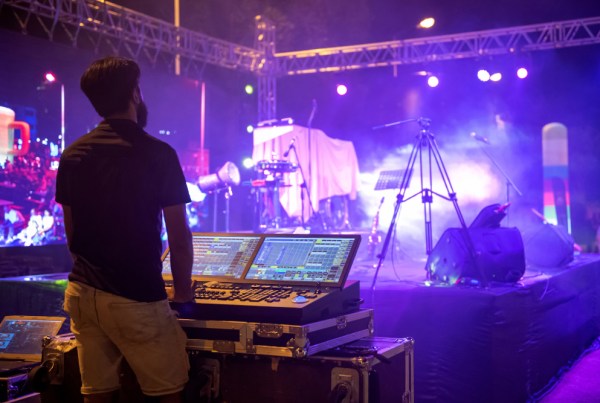
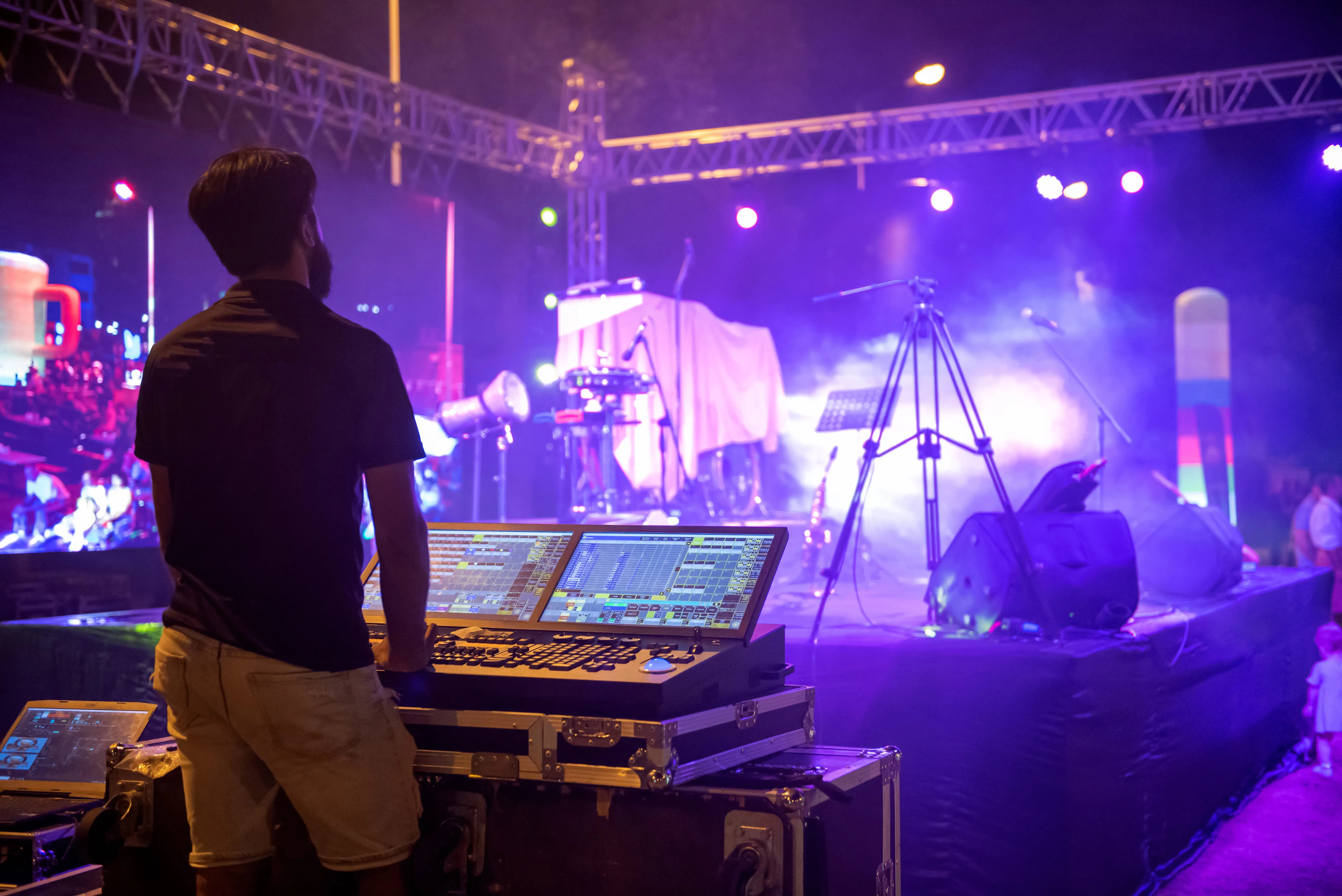
All these systems connect to the control area, sometimes called “front of house” or “tech world,” where engineers operate during show time.
5. Testing and Cue Prep
Once everything’s built, the production team powers up for testing. Graphics are checked, lighting looks are run, microphones are line checked, and video playback is confirmed. This phase often includes the first Mini rehearsal or “cue to cue,” ensuring everyone knows when transitions, videos, and lighting changes happen.
6. Client Walkthrough
Before the day wraps, the project manager or production manager will walk you through the space. It’s your chance to see the vision come to life, approve layout adjustments, and confirm branding or content placement before doors open.
7. What You Can Do to Help
- Be available for approvals. Quick signoffs keep the crew moving efficiently.
- Content delivery. Ensure content is delivered on time so it keeps us on track.
- Trust your team. Your production crew has done this hundreds of times they’ll anticipate needs you might not even see coming.
Final Thought
Load-in day can look like organized chaos but really it’s an orchestra, every piece of gear, every label on a cable, and every decision made during pre-production comes together like a symphony to ensure your event is flawless once the lights come up.
Ready to plan your next show?
At AVT Productions, our experienced project and production managers handle every detail from dock times to cue sheets so you can walk into a fully realized event environment with confidence.
Let’s start your production plan today. Contact AVT Productions »